Active Presence
How teams collaborate and create when it actually matters
For Department Heads, Management and People Leaders
The Programme
Active Presence is a single-day, in-person training designed to strengthen the quality of creative collaboration when outcomes are not yet known and the stakes are high.
Participants work through a structured progression of group and one-on-one exercises adapted from professional actor training, with real-time observation and feedback throughout. The emphasis is on observable cause and effect: how small shifts in attention and behaviour materially alter trust, candour, and the capacity to think and create together under pressure.
No conceptual models. No scripted techniques. No role-play, theatre games, singing, or dancing.
What Participants Develop
Through the exercises, participants build the capacity to:
Stay present and responsive under pressure rather than retreating into self-protection
Meet vulnerability constructively, in themselves and in others, to deepen trust
Increase candour without escalating interpersonal risk
Contribute incomplete and emerging thinking, the raw material of creative work
Collaborate effectively when the outcome isn't yet clear
Notice and adjust the behavioural habits that quietly distort communication
Sustain creative engagement when stakes are high and direction is still emerging
Psychological Safety
Google's Project Aristotle found that psychological safety is the single most important factor in high-performing teams. Harvard's Amy Edmondson defines it as the shared belief that it's safe to take interpersonal risks: to ask questions, surface doubts, admit mistakes, challenge assumptions, and contribute ideas before they're fully formed.
But psychological safety isn't created by policy or procedure. It's created, or destroyed, moment by moment in live interaction. As Brené Brown puts it, vulnerability is the birthplace of innovation, creativity, and change, and no verbal formula or behavioural prescription gets you there.
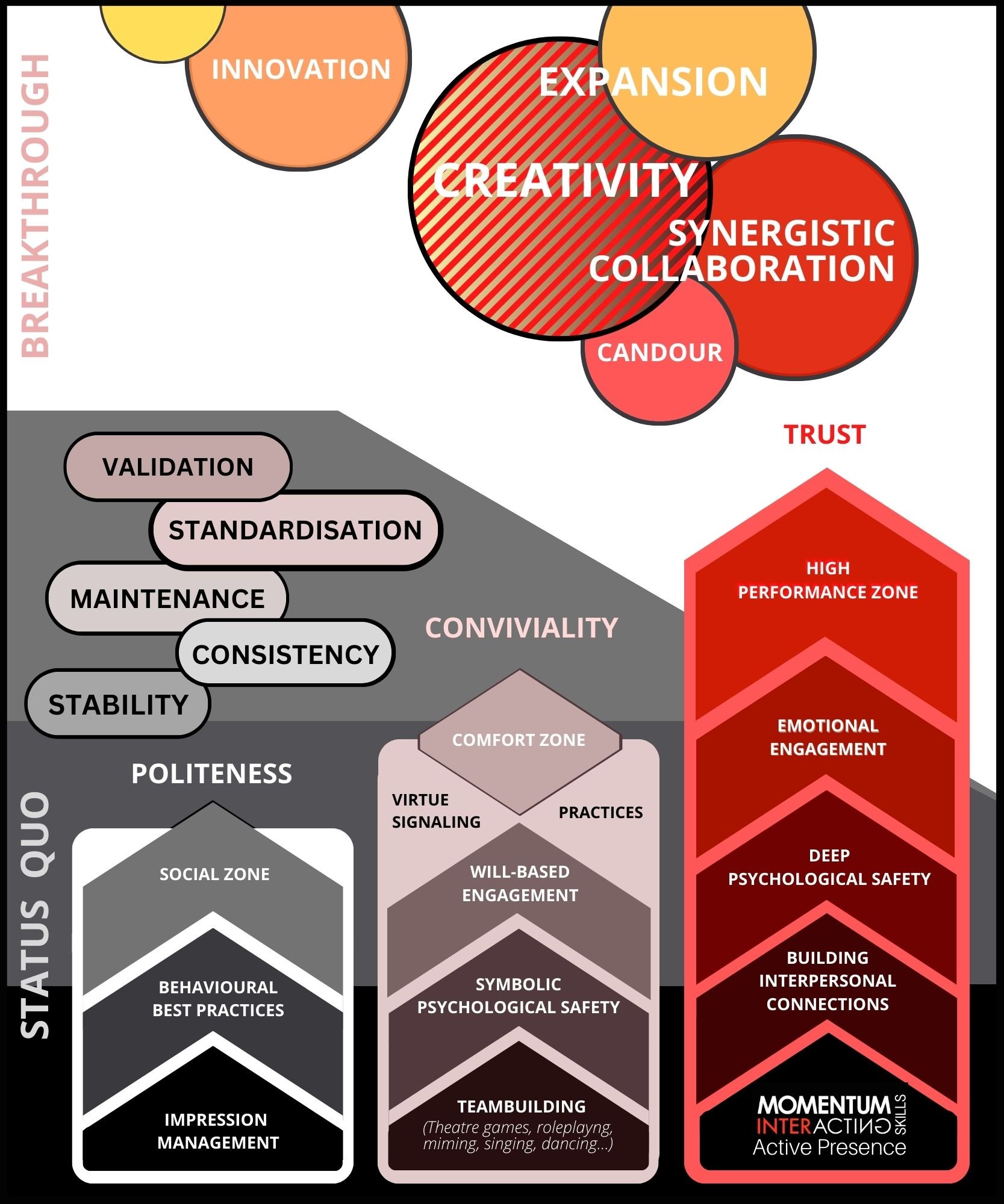
Active Presence works at the level where psychological safety actually lives: in how people signal openness or withdrawal, how vulnerability is met or deflected, and how attention either invites or closes down real collaboration.
Format
One day, in person
Up to ten participants
Structured progression of behavioural exercises
Real-time observation and feedback throughout
Designed for leadership teams, management groups, and professionals working in high-stakes collaborative environments where the quality of creative output depends on the quality of interaction.